Joint position statement
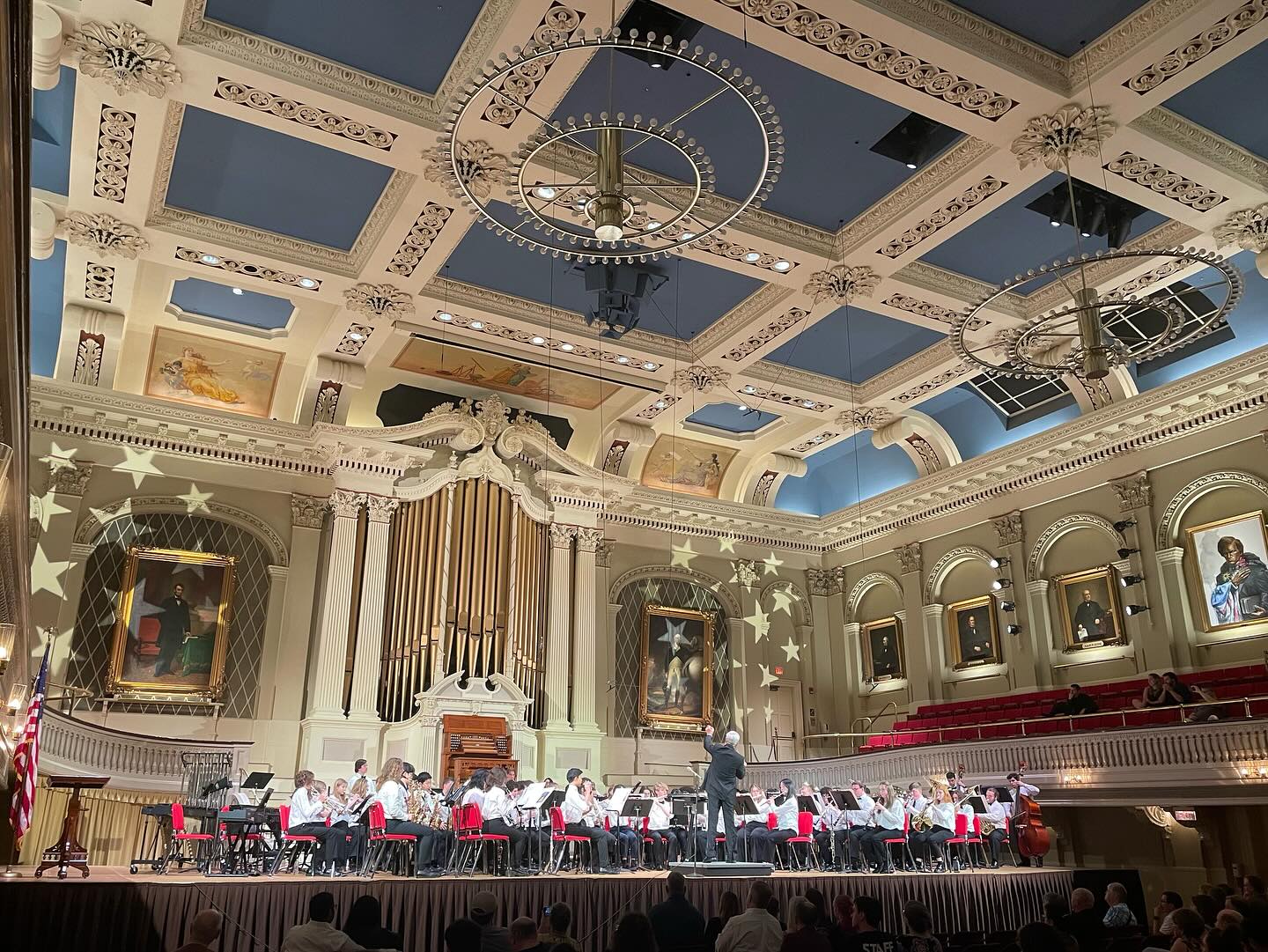
The National Band Association (NBA), American Bandmasters Association (ABA), and John Philip Sousa Foundation jointly oppose the proposed Federal tariffs on imported brass-wind musical instruments and related parts and accessories. We want our members to understand why our organizations have taken this position. While we recognize the importance of supporting American manufacturing and maintaining strong domestic industries, we believe these proposed tariffs would have unintended consequences for music education and the band community without providing benefits sufficient to justify those costs.
Brass instruments are essential educational tools in schools, colleges, universities, and community music programs throughout the country. Additional tariffs would likely increase the cost of acquiring and maintaining all instruments made from brass. Those increases would place additional pressure on already limited school music budgets, extend instrument replacement cycles, and potentially reduce access for students, particularly in economically disadvantaged communities. These concerns are especially significant for larger and more expensive instruments that schools routinely provide because individual purchase is beyond the means of many families.
We also believe that finished musical instruments should not be viewed simply as derivative metal products. Their value comes not principally from their raw metal content, but from their educational and artistic purpose. When students are unable to access an instrument, they may miss out on an opportunity to participate in a positive and supportive school community. Band provides more than musical instruction; it gives students a sense of belonging and connection, providing social-emotional benefits that can positively impact them for years to come.
For these reasons, the NBA, ABA, and John Philip Sousa Foundation oppose the proposed tariffs and support the exclusion of brass-wind musical instruments and related parts and accessories from the proposed tariff expansion. Our position reflects the shared missions of our organizations and our responsibility to advocate for the health of bands and music education. We believe that preserving reasonable access to quality musical instruments is essential to sustaining America’s globally unique band tradition for future generations.
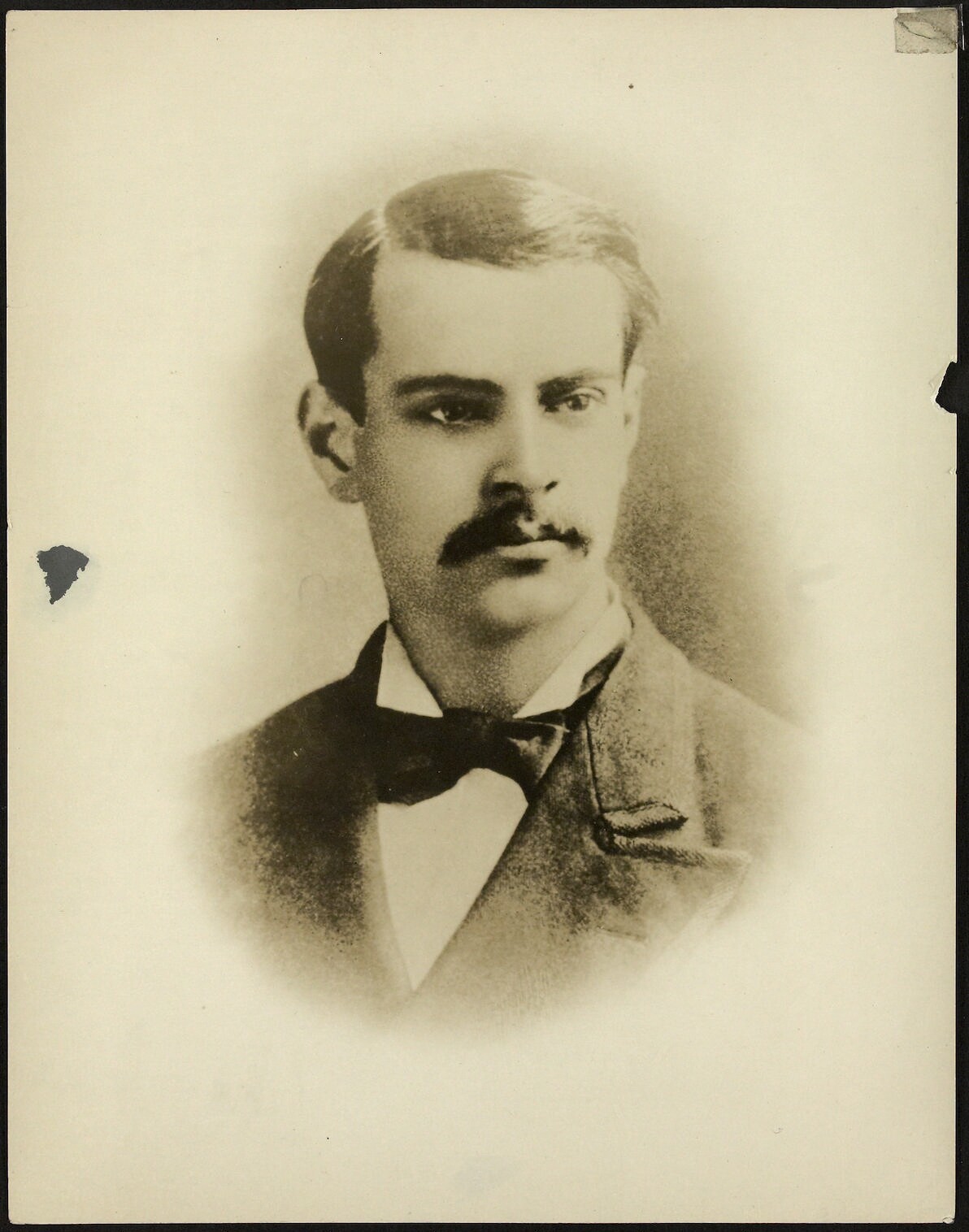
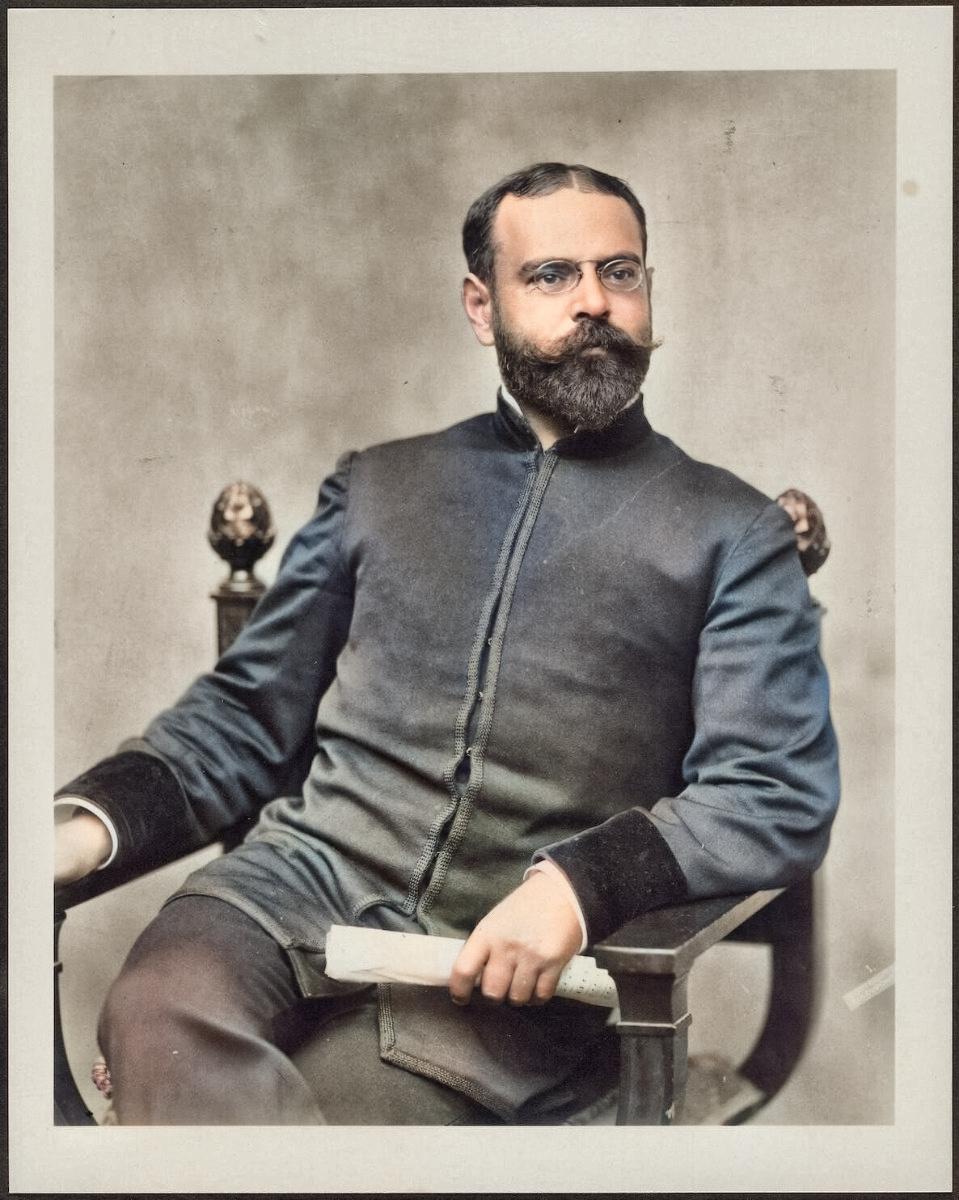
John Philip Sousa was born in Washington, D.C., the third of ten children of João António de Sousa (John Anthony Sousa) (22 September 1824 – 27 April 1892), who was born in Spain, though of Portuguese ancestry, and his wife Maria Elisabeth Trinkaus (20 May 1826 – 25 August 1908) from Fränkisch-Crumbach, who was of German ancestry.[3][4] He began his music education under the tuition of John Esputa Sr., who taught him solfeggio.[5] This was short-lived, however, because of the teacher's frequent bad temper.[5] His real music education began in 1861 or 1862 as a pupil of John Esputa Jr., the son of his previous teacher under whom Sousa studied violin, piano, flute, several brass instruments, and singing.[5] Esputa shared his father's bad temper, and the relationship between teacher and pupil was often strained, but Sousa progressed very rapidly and was also found to have perfect pitch.[5] He wrote his first composition "An Album Leaf" during this period, but Esputa dismissed it as "bread and cheese" and the composition was subsequently lost.
His father was a trombonist in the Marine Band, and he enlisted Sousa in the United States Marine Corps as an apprentice at age 13 to keep him from joining a circus band.[6] In the same year, he began studying music under George Felix Benkert.[7] Sousa was enlisted under a minority enlistment meaning that he would not be discharged until his 21st birthday.
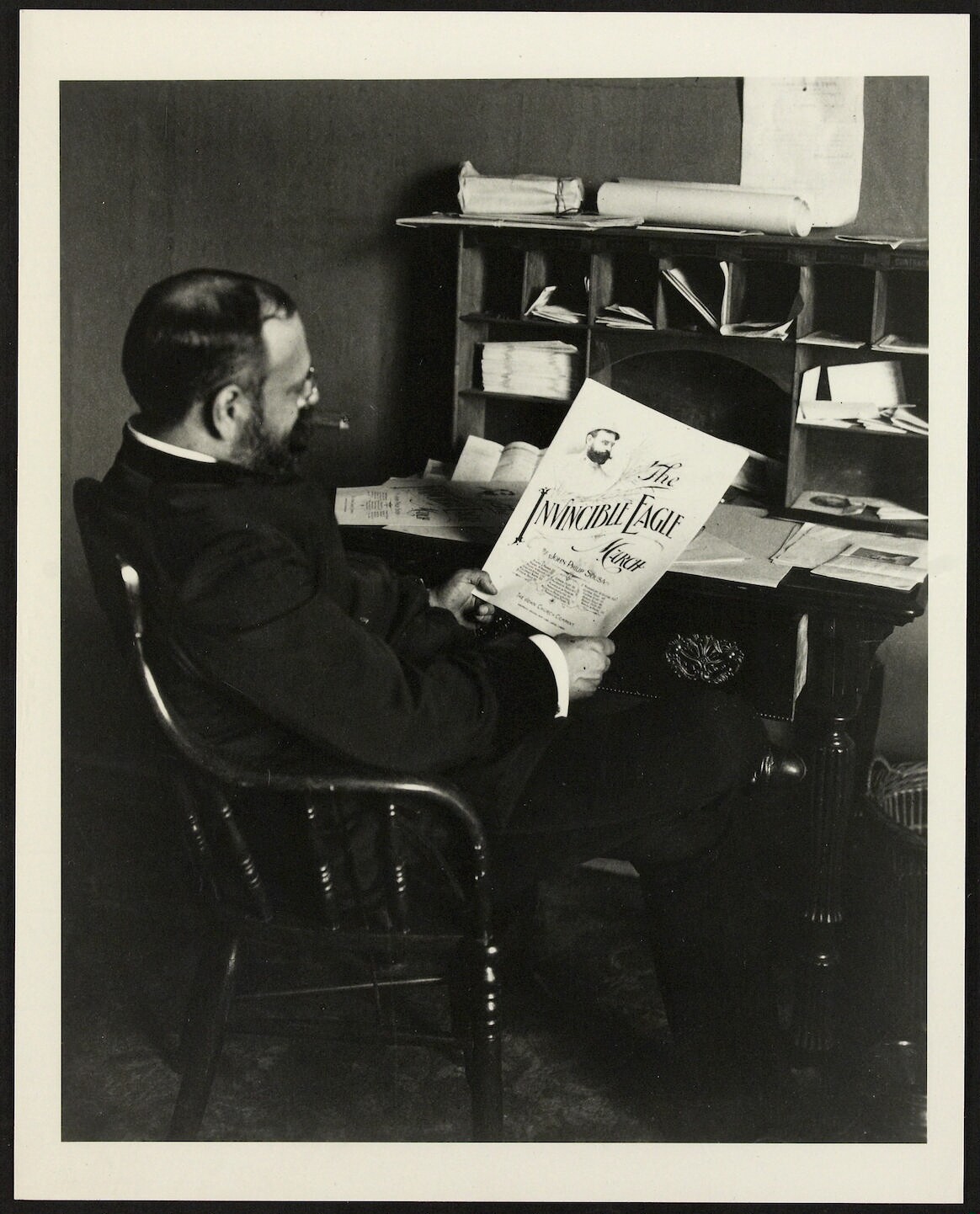
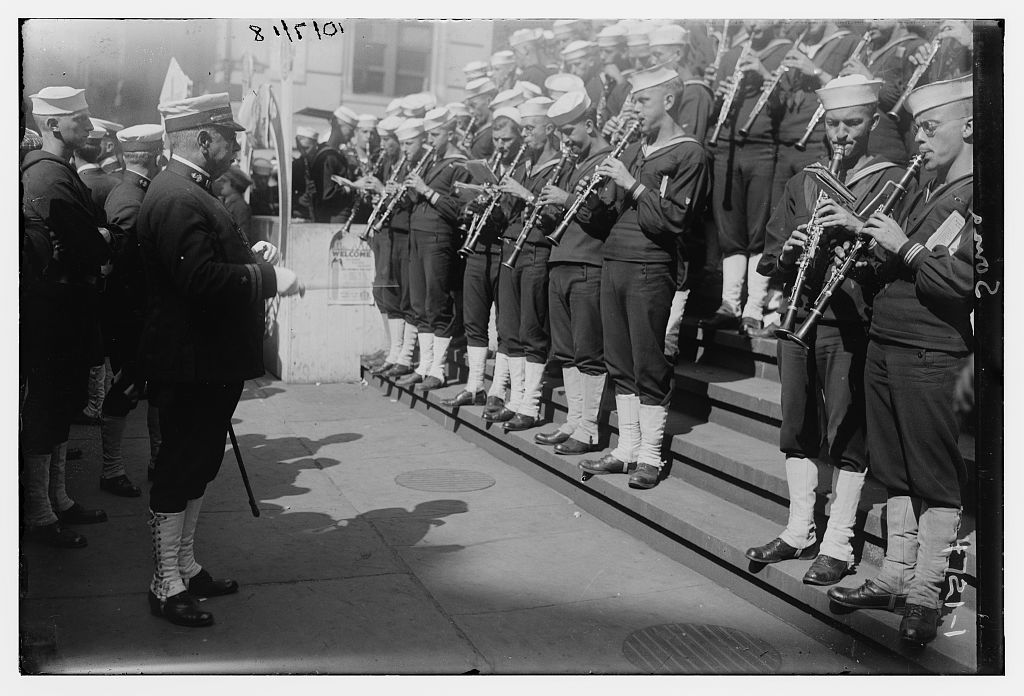
Sousa completed his apprenticeship in 1875 and began performing on the violin.[8] He then joined a theatrical pit orchestra where he learned to conduct.[8] He returned to the Marine Band as its head in 1880 and remained as its conductor until 1892. He led "The President's Own" band under five presidents from Rutherford B. Hayes to Benjamin Harrison. His band played at the inaugural balls of James A. Garfield in 1881 and Benjamin Harrison in 1889.[9][10]
The marching brass bass or sousaphone is a modified helicon created in 1893 by Philadelphia instrument maker J. W. Pepper at Sousa's request, using several of his suggestions in its design. He wanted a tuba that could sound upward and over the band whether its player was seated or marching. C.G. Conn recreated the instrument in 1898, and this was the model that Sousa preferred to use.[11]Sousa organized
The Sousa Band the year that he left the Marine Band, and it toured from 1892 to 1931 and performed at 15,623 concerts,[12] both in America and around the world,[13] including at the World Exposition in Paris and at the Royal Albert Hall in London.[3][14] In Paris, the Sousa Band marched through the streets to the Arc de Triomphe, one of only eight parades that the band marched in during its 40 years
On December 30, 1879, Sousa married Jane van Middlesworth Bellis (1862–1944),[3] and their children were John Philip, Jr. (April 1, 1881 – May 18, 1937), Jane Priscilla (August 7, 1882 – October 28, 1958), and Helen (January 21, 1887 – October 14, 1975).[19] All were buried in the John Philip Sousa plot in the Congressional Cemetery. Jane was descended from Adam Bellis who served in the New Jersey troops during the American Revolutionary War.[20]
On March 15, 1881, the "March King" was initiated to the Scottish Rite Freemasonry in the Hiram Lodge No. 10, Washington, DC and later became Master Mason for 51 years.[21][22]
Late in his life, Sousa lived in Sands Point, New York. He died of heart failure at age 77 on March 6, 1932, in his room at the Abraham Lincoln Hotel in Reading, Pennsylvania. He had conducted a rehearsal of "The Stars and Stripes Forever" the previous day with the Ringgold Band as its guest conductor.[22] He is buried in Washington, D.C.'s Congressional Cemetery.[23] His house Wild Bank has been designated a National Historic Landmark, although it remains a private home and is not open to the public.[24]
Sousa was decorated with the palms of the Order of Public Instruction of Portugal and the Order of Academic Palms of France. He also received the Royal Victorian Medal from King Edward VII of the United Kingdom in December 1901 for conducting a private birthday concert for Queen Alexandra.[25][26]
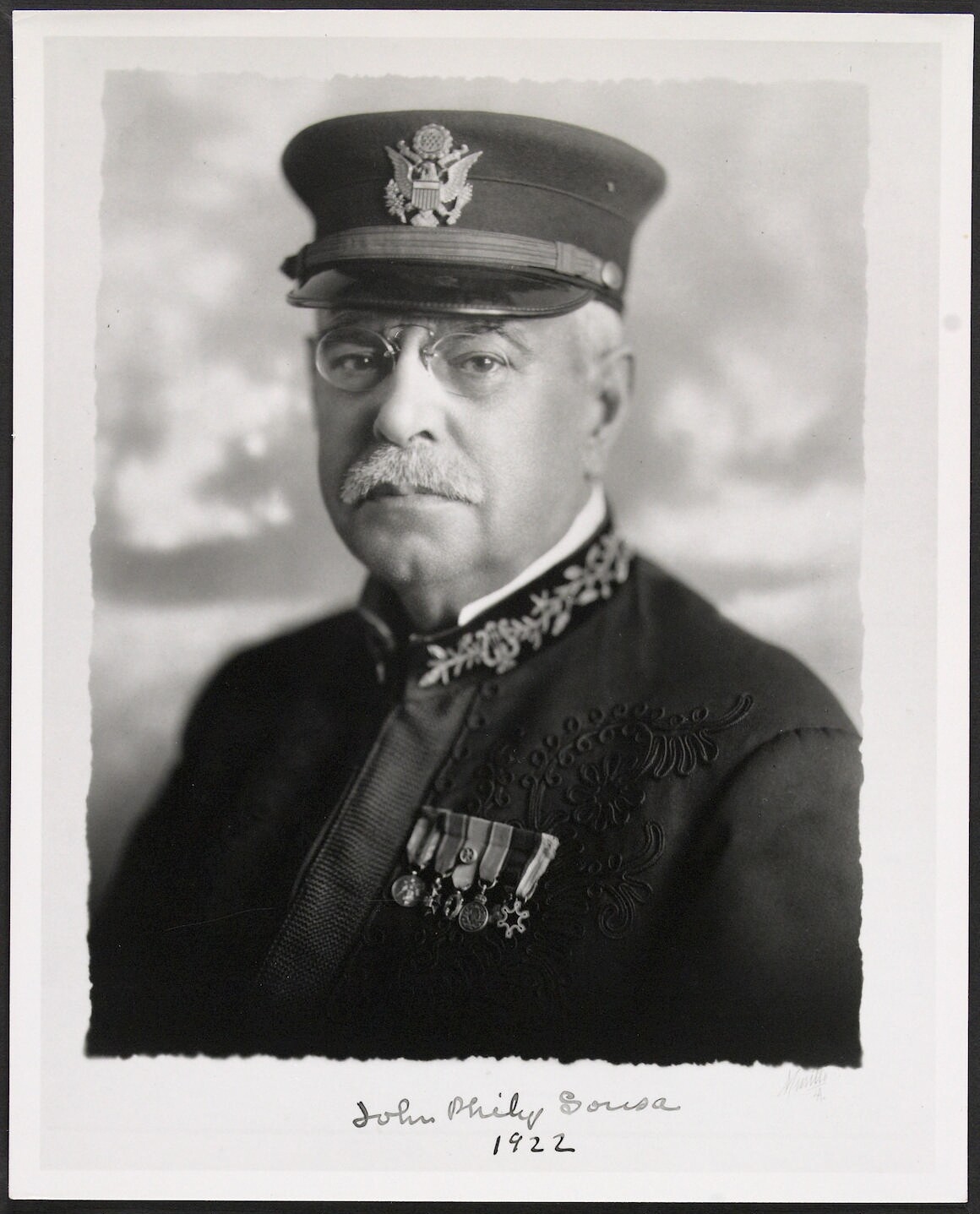
In 1922, he accepted the invitation of the national chapter to become an honorary member of Kappa Kappa Psi, the national honorary band fraternity.[27] In 1932, he was initiated as an honorary member of Phi Mu Alpha Sinfonia, the national fraternity for men in music, by the fraternity's Alpha Xi chapter at the University of Illinois.[28][unreliable source?]
The World War II Liberty Ship SS John Philip Sousa was named in his honor.
In 1952, 20th Century Fox honored Sousa in their Technicolor feature film Stars and Stripes Forever with Clifton Webb portraying him. It was loosely based on Sousa's memoirs Marching Along.[29]
In 1987, an act of Congress named "The Stars and Stripes Forever" as the national march of the United States.[30]
He was posthumously enshrined in the Hall of Fame for Great Americans in 1976
The John Philip Sousa Foundation is a non-profit foundation dedicated to the promotion of international understanding through the medium of band music. Through the administration of band related projects, the foundation seeks to uphold the standards and ideals of that icon of the American spirit, John Philip Sousa.Just as the name Sousa is synonymous with bands, so bands are bridges which connect the music and culture of all strata of our society. And no type of music better typifies the spirit of America throughout the world than do the stirring strains of a Sousa march.The foundation administrates band-related projects such as:
The Sousa Foundation seeks to uphold both the standards and the ideals of that icon of the American spirit, John Philip Sousa
.jpg)